Quietly Refined, Layered Complexity
In this split-level home, gentle level changes define zones and functions, adding a playful rhythm to everyday living.
The 800-square-meter site sits in a low-lying part of Rayong, not far from the coast and known to have flooded with seawater in the past. When the couple began planning their new family home, the first thing they did was raise the and well above street level.
“We wanted a house that feels comfortable for just the two of us and our three cats. Something private, with plenty of storage but never cluttered. Most importantly, we dreamed of a split-level home so it wouldn’t feel dull or monotonous.”
Phongphat Ueasangkhomset, the architect, outlines the concept behind the house’s design:
“The plot is a simple rectangle, about 40 by 20 meters. We set the house back from the fence so it sits deeper within the site. Because the owners had already raised the ground level, the house naturally sits higher than its neighbors, which gives it a strong sense of privacy. Pulling it back from the edge also keeps it away from noise and dust from the street. That space in front becomes a parking area and a planted courtyard, with a low wall that casts shade, keeps the house cooler, and creates breathing room for cross-ventilation. We shifted the front of the house to face north instead, and placed the main courtyard there so views of greenery open directly onto the living areas. The west side, once the obvious frontage, now serves only as the entry point from the road. As for the south, which also gets strong sunlight, we turned it into a service zone, used for storage, stairs, and bathrooms, where the heat helps dry out dampness.”
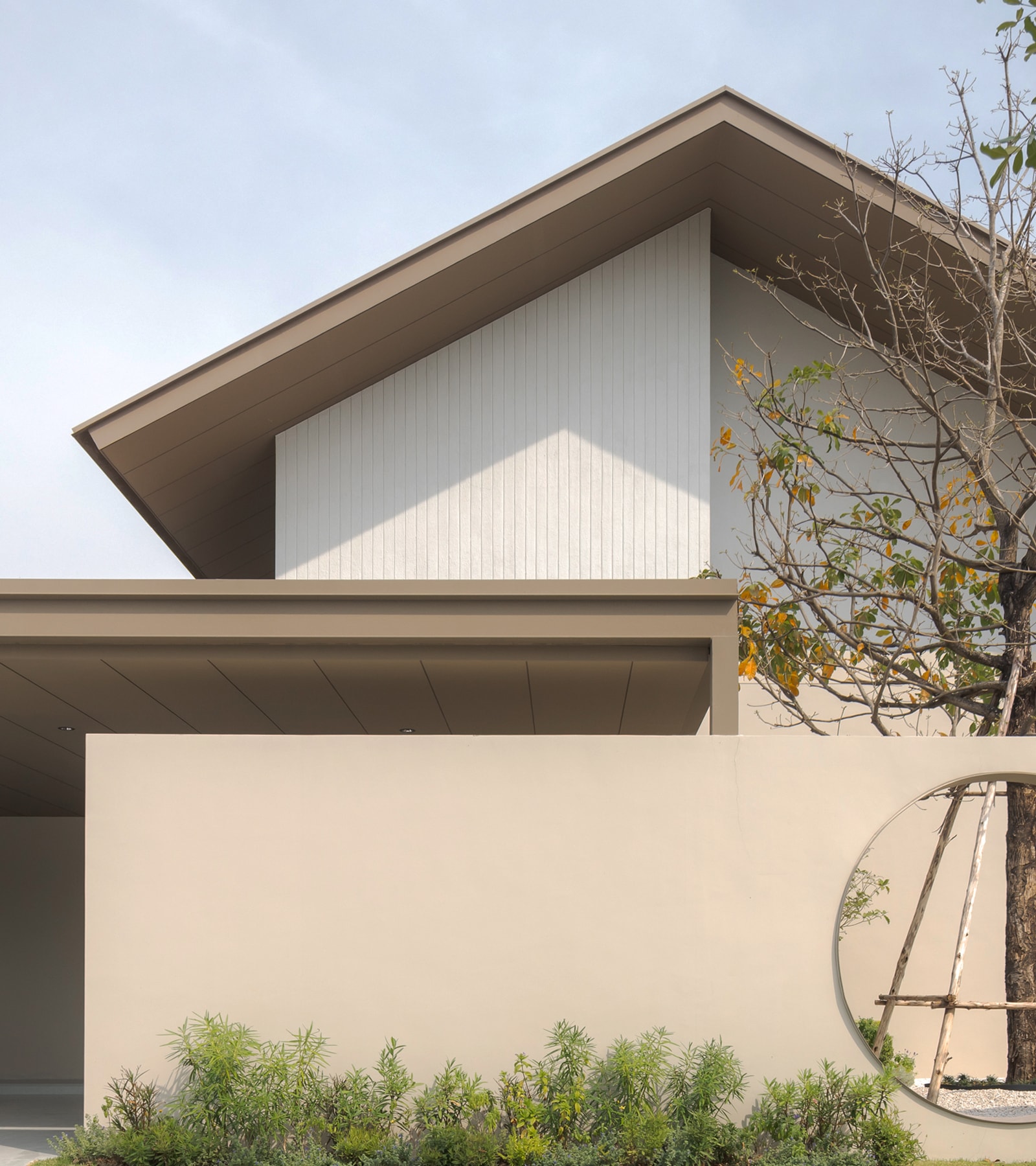
To ensure the home blends seamlessly with the surrounding provincial landscape, the design adopts clean, geometric lines as its primary language, topped with a pitched roof and generous eaves well suited to Thailand’s tropical climate. Approaching the entrance, subtle shifts in level begin to reveal themselves: three raised stepping stones lead to the front door, hinting that behind this seemingly straightforward exterior lies the kind of playful interior the owners had envisioned from the very beginning.
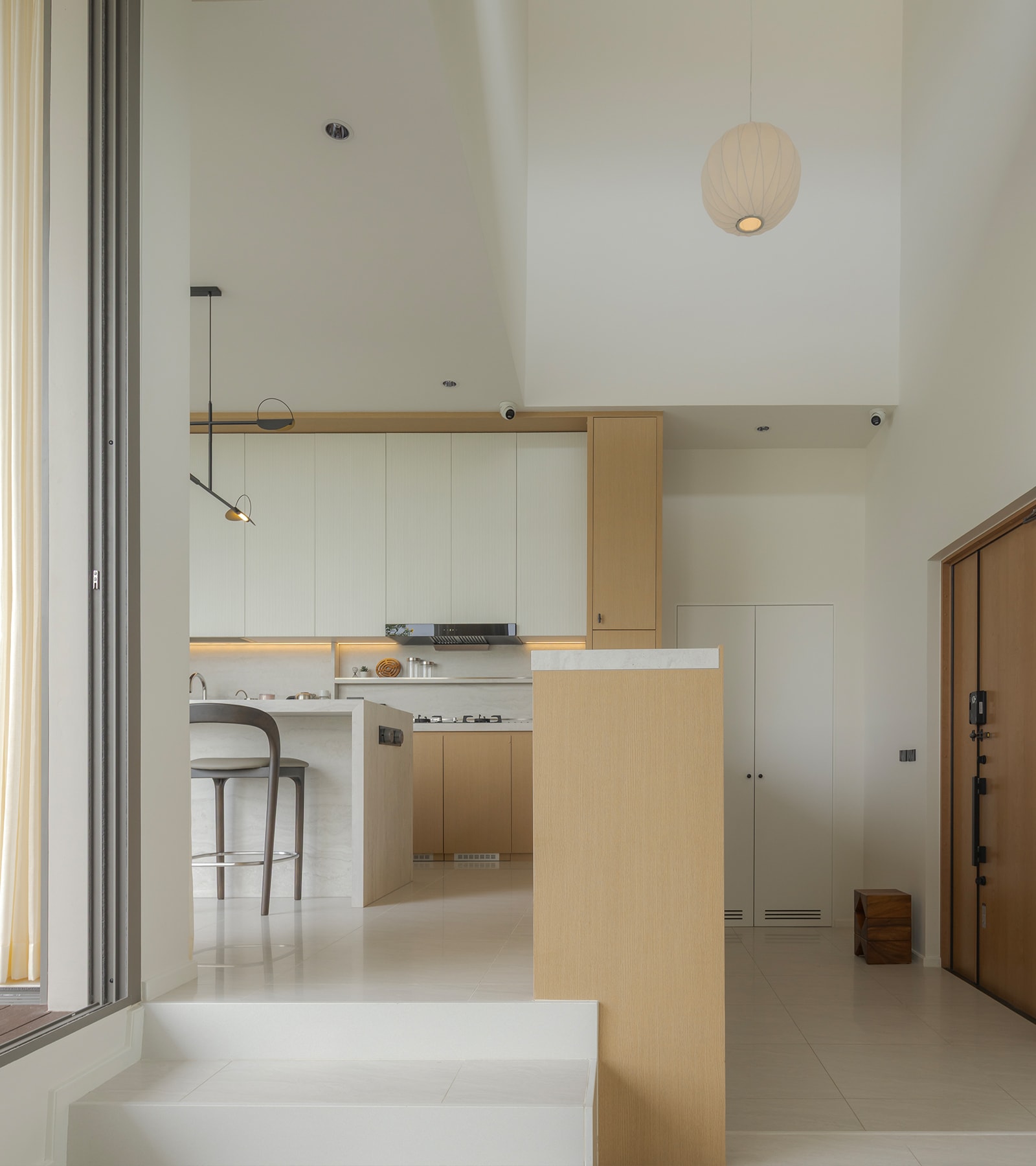
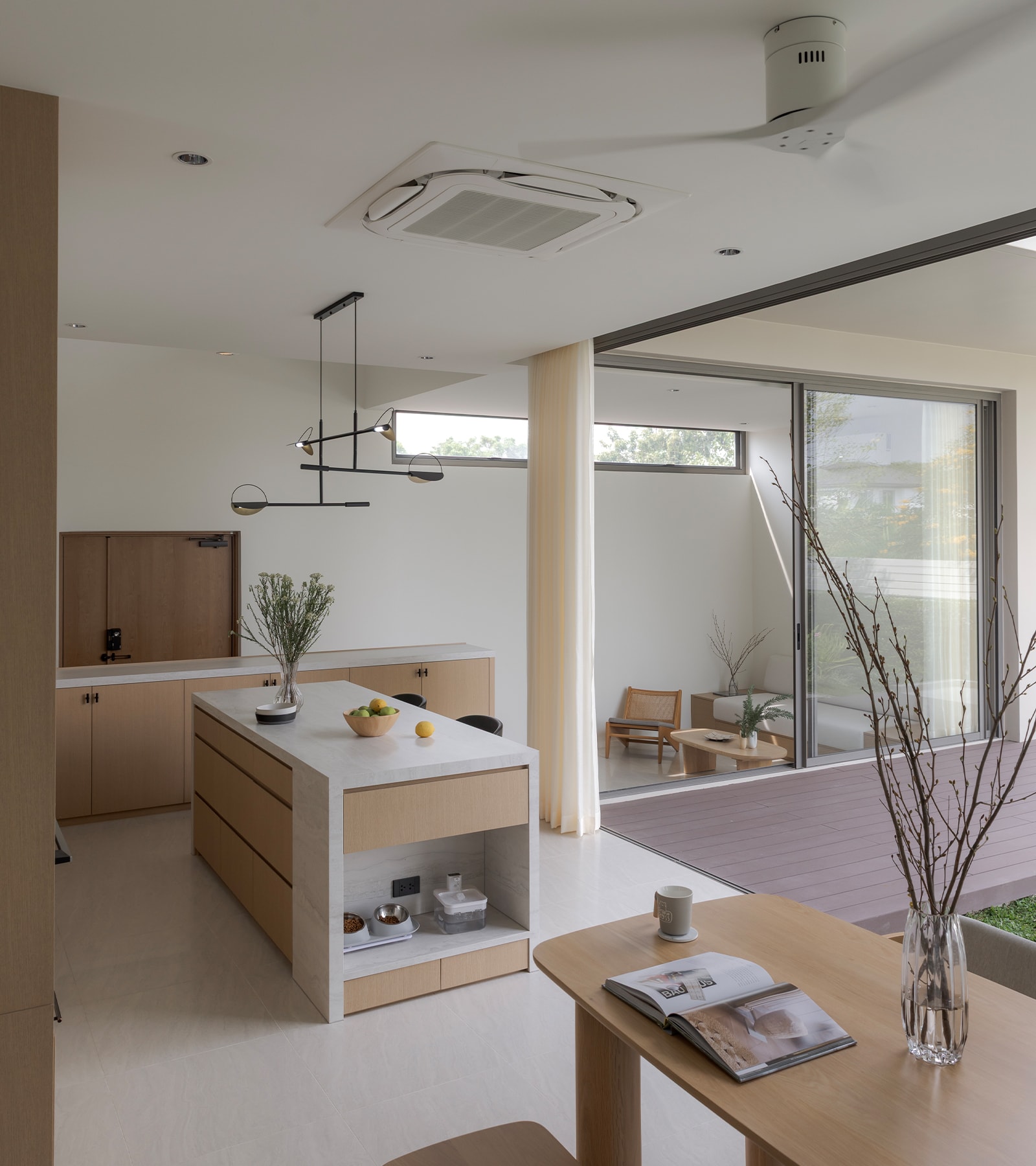
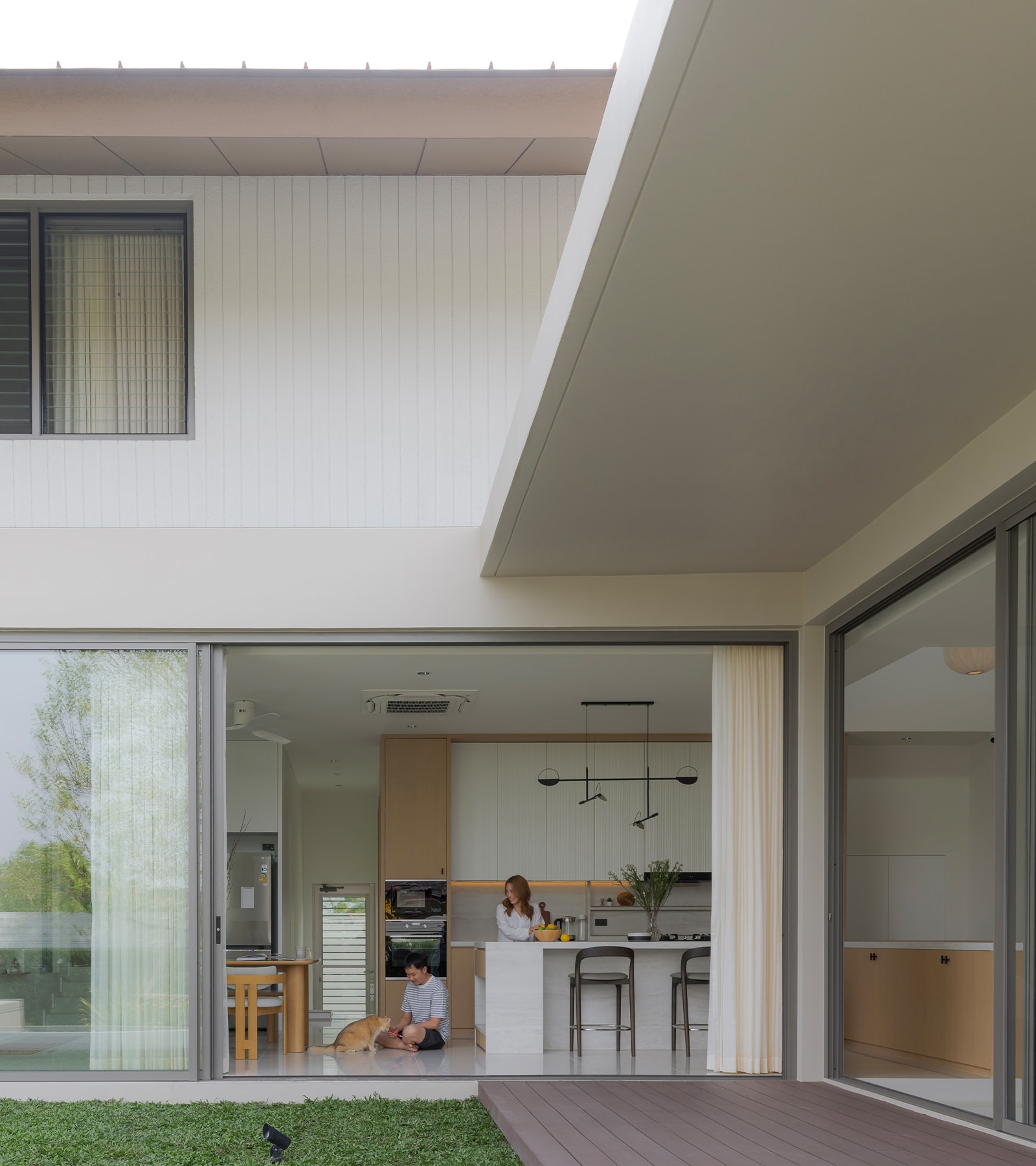
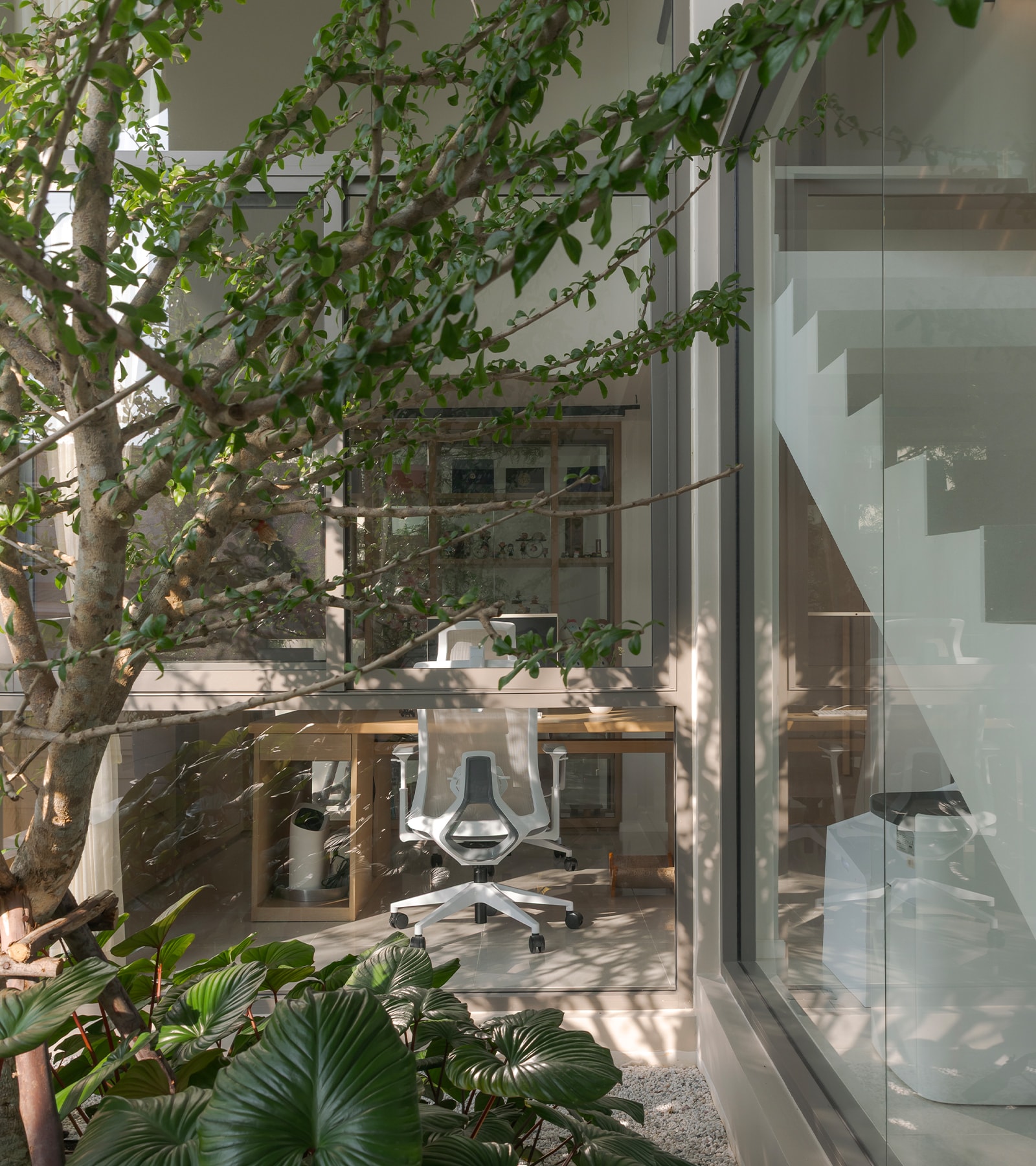
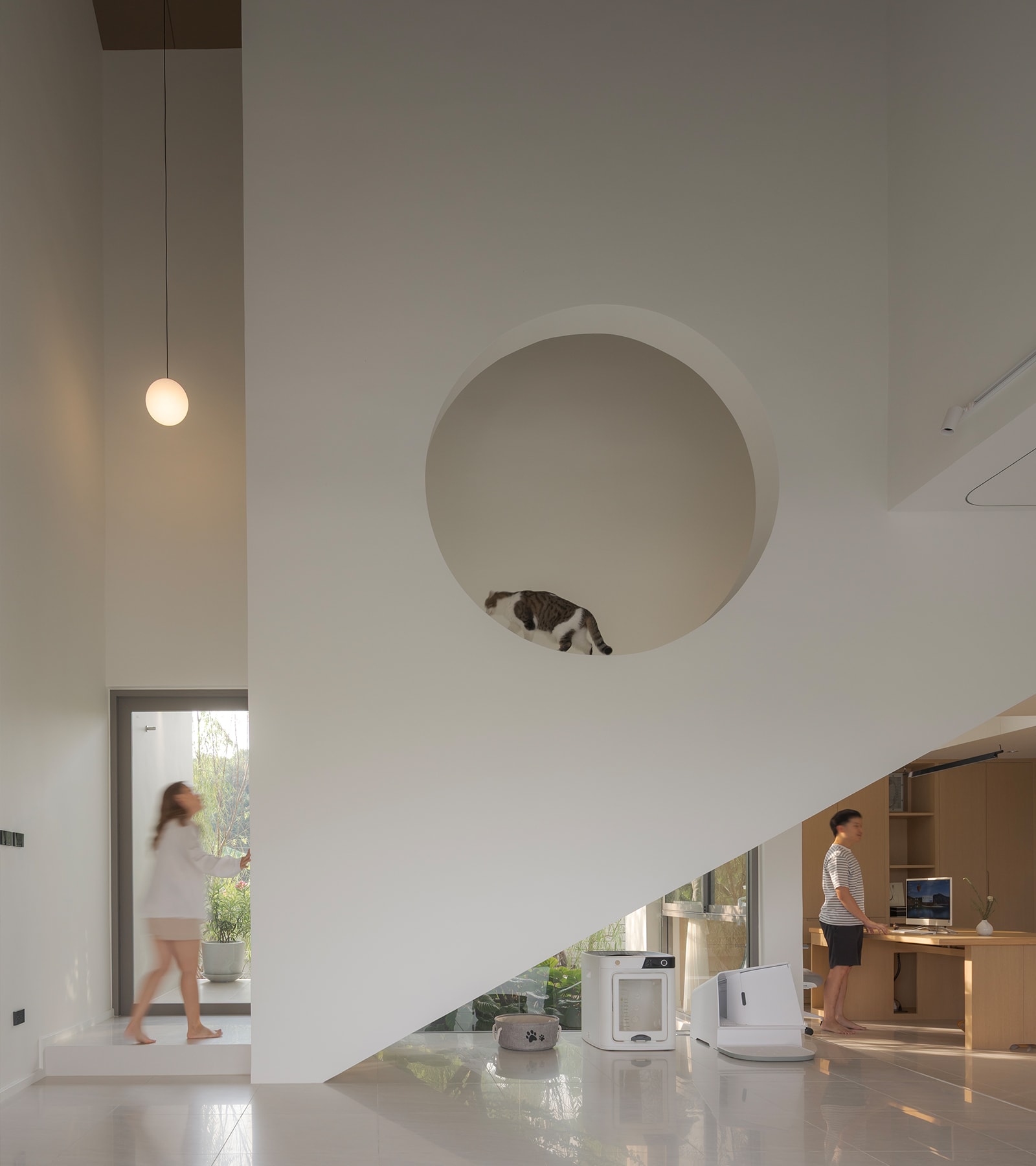
The architect used a series of small interior level changes to subtly define each zone of the house, guiding movement from the welcoming area to the central living spaces and, finally, to the most private rooms at the back. Opening the front door, visitors first step into a modest entry hall connected to a passageway leading to a semi-formal sitting area for guests on the left. Here, the private quarters remain out of sight, screened by a counter-height wall positioned at eye level. Even so, the space still feels open, with glimpses of the northern courtyard framed through well-placed openings. Only after climbing a couple of small steps does one arrive at the central zone: a pantry and dining area arranged in a continuous line that follows the home’s elongated plan. A wide expanse of glass here floods the interior with natural light and offers an uninterrupted view of the courtyard garden. Beyond a few more gentle steps lies a generous lounge and recreation space. It serves as the private heart of the home, which the owners can adapt over time, whether setting up a ping-pong table, creating a workout corner, or turning it into a play area for future children. In this zone, a broad interior wall shields the staircase leading to the upstairs bedrooms. A circular opening carved into its center maintains a visual link between levels and keeps movement between floors feeling open and connected.
“We spend most of our time in this part of the house, from the pantry to the dining table to the sofa in the lounge. The small level changes in each area make using every corner fun and never dull, and the whole space feels wonderfully open. Back when we lived in a shophouse, we never realized how uplifting it is to see greenery all the time. We’re grateful to the architect for thinking through every detail for us. Living here now feels so relaxing. We wake up to nature, eat our meals looking out at trees. On some weekends when my parents drop by, they would lie down, watch TV, and always say how comfortable the house feels. We’ve become real homebodies. Even the work corner inside the house has a view of the little courtyard at the back,” the couple shared.
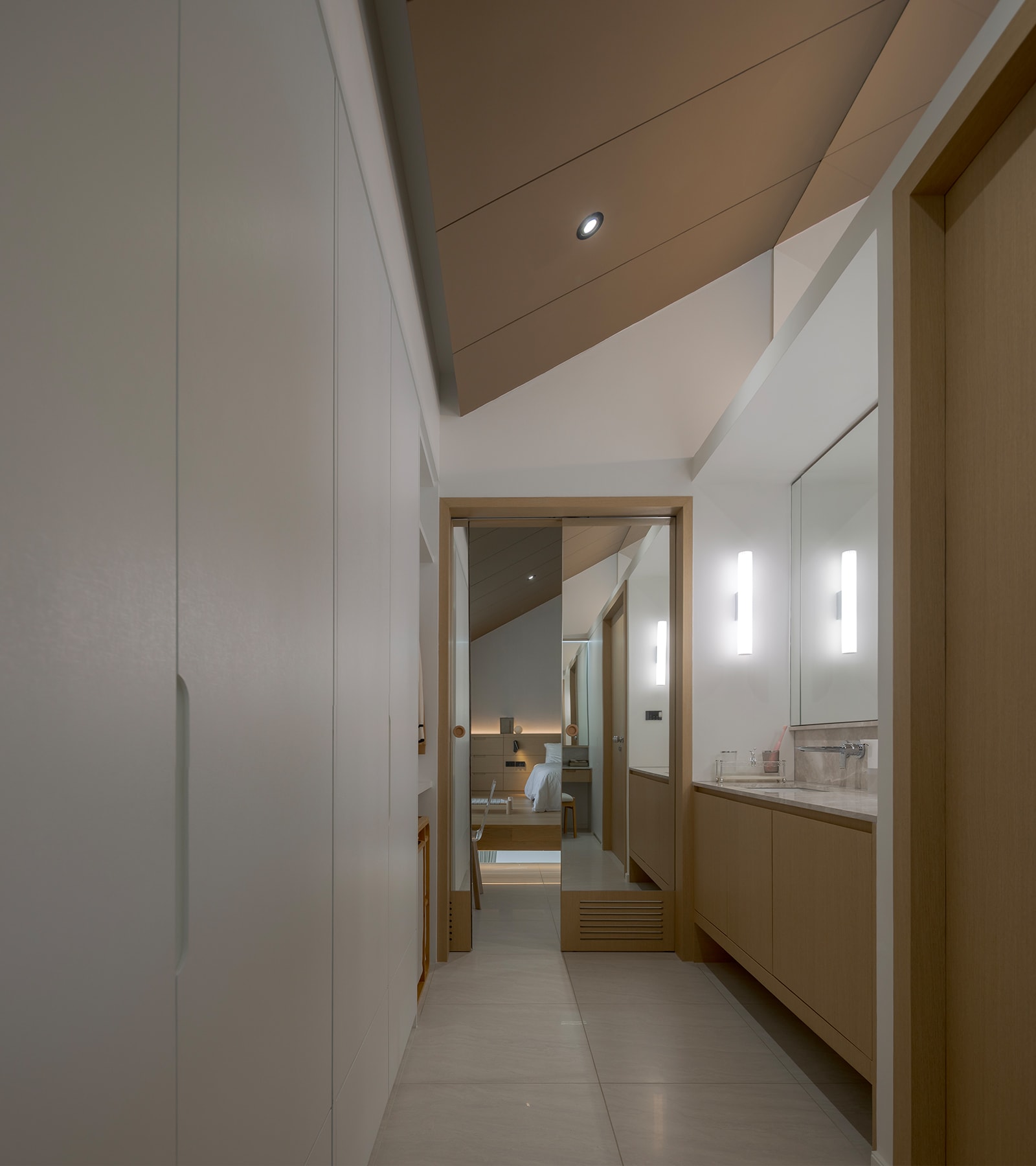
Along with the natural light and courtyard greenery that give the home its calming atmosphere, the architect also chose earth-tone finishes for both the exterior and interior surfaces. These pair with touches of wood in the built-in and freestanding furniture, creating a palette that feels soft and harmonious.
“We went with standard materials so the budget would stay within the owners’ limits, but even the simplest finishes need to be done well if you want the house to feel right. With the walls, we used a basic textured finish but painted it a warm cream that plays beautifully against the brown tones. To keep the walls from looking too bare, we added subtle grooves as a nod to a traditional Thai house—simple, low-maintenance, but with just enough character. Inside, the spaces are open and filled with daylight, and once we brought in some greenery, the whole place immediately felt fresher and more alive.”
Although the owners weren’t sure what style they loved at first, living in their new home has clearly reshaped the way they live.
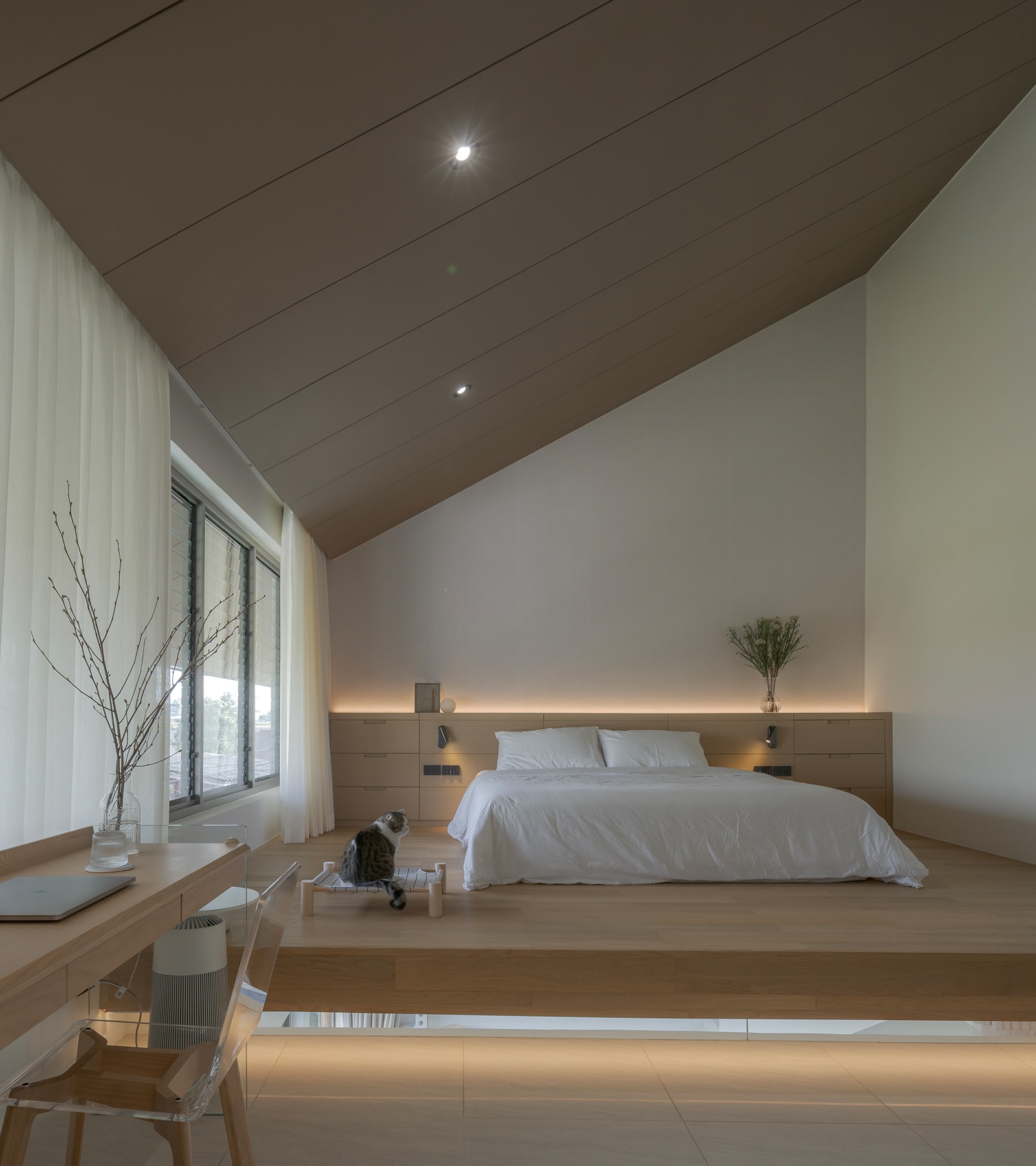
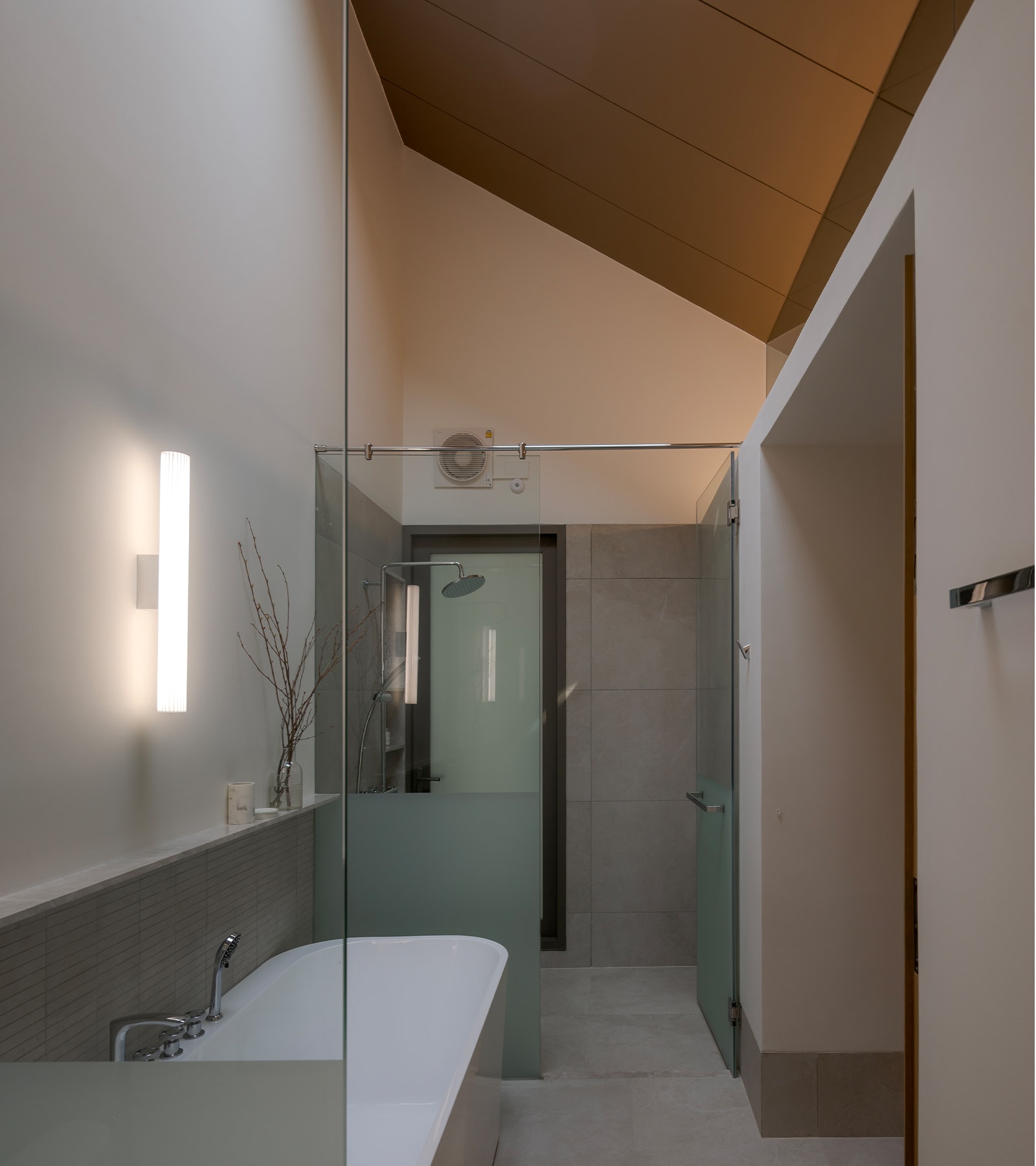
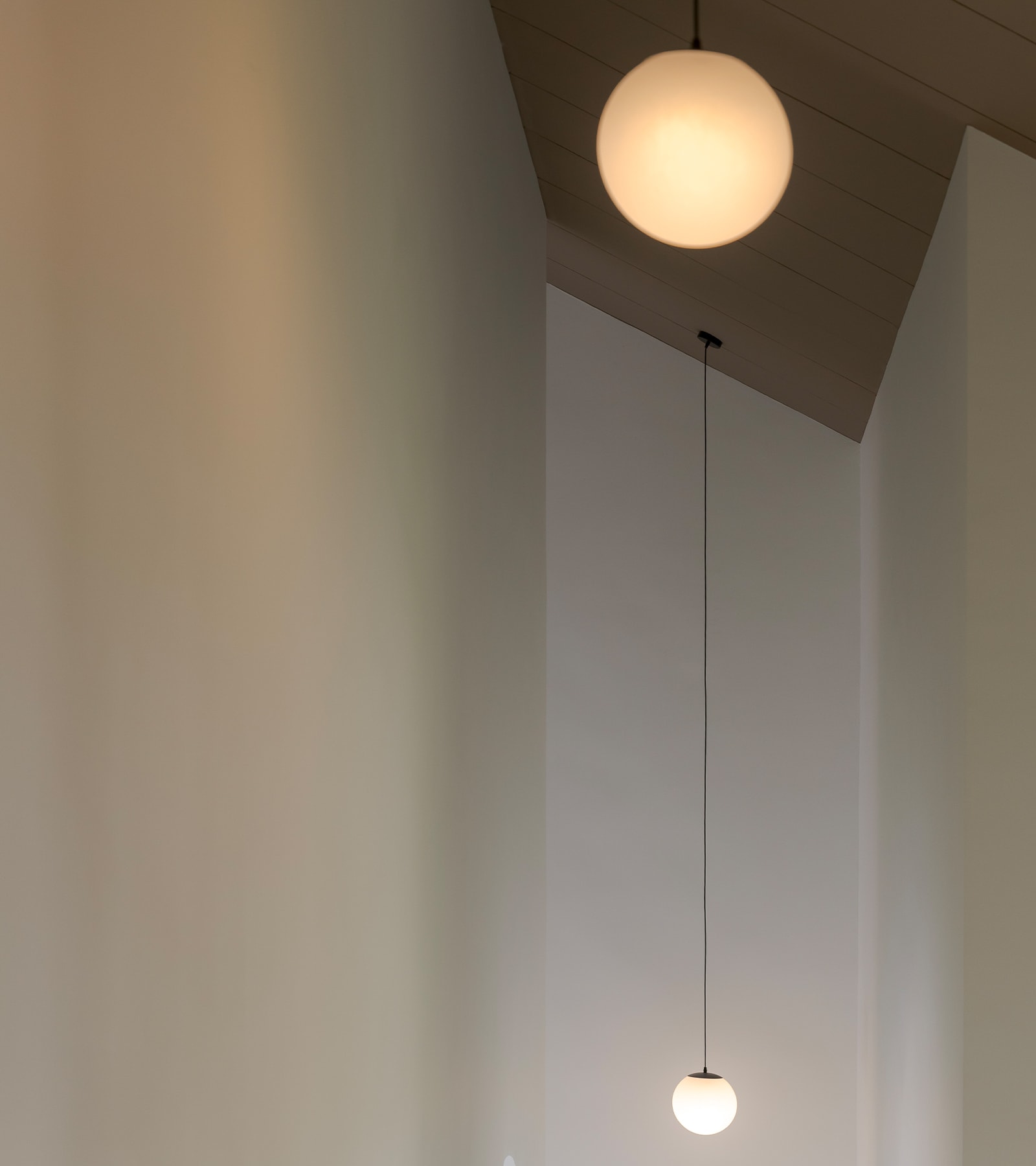
“We once went back to sleep at our old shophouse, and it just didn’t feel the same anymore,” they laugh. “Living here, everything works so well. The functions are complete, everything is convenient, and it’s all far more comfortable than we ever imagined. It’s nothing like the cookie-cutter layouts we’d seen before. This place makes living at home feel genuinely fun. Take the sofa corner in front of the TV, for example. Meng (the male owner) loves it. He can flop down and relax, and more than once he’s dozed off there for hours. The round opening in the wall by the hall, when lit at night, feels as if there’s a moon glowing inside the house. The pitched ceiling in the bedroom also gives a clear sense of ‘home.’ Even our cats have their own little dining spot, their own passageways in and out, and sunbathing corners. They seem so much happier now, no more midnight yowling like before. We’ve even discovered a new hobby together, gardening. We knew nothing about plants before, but now we happily spend nearly two hours watering them. It makes us feel that building this house was absolutely worth it.”